A dead watch battery is a ten-minute job with the right tools — and a five-minute repair-shop bill avoided. This is the step-by-step that watch owners actually need, plus the model chart that stops the guessing.
The tools you need
- Case-back opener (knife or wrench for snap-backs, a wrench for screw-down backs)
- A pair of plastic picks or tweezers
- Fresh battery of the exact model
- Soft cloth and a magnifier
Step 1: Read the model number first
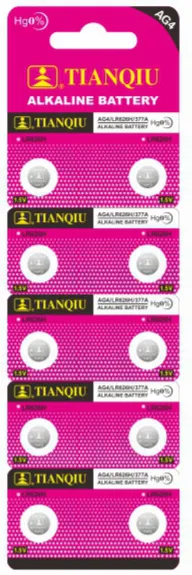
The number stamped on the old cell IS the specification: 377 / SR626SW / AG4 are the same 6.8 × 2.6 mm silver-oxide cell; 371 / SR920SW / AG6 are 9.5 mm; 364 / SR621SW / AG1 are 6.8 mm but thinner. If the cell is worn, check inside the case back — many watches print the battery type there.
Common watch batteries worldwide — the exact chart lives on our watch battery buying guide →.
Step 2: Open the case back
Snap-backs have a tiny notch at the edge — use the knife there, never on the glass. Screw-down backs take a wrench. If the back does not budge with moderate force, stop: it may be a twist-back or a lid requiring a special tool.
Step 3: Remove the old cell
Pry gently with a plastic pick against the rim of the battery holder. Metal tools can short the cell against the movement — a common way to damage a fine watch.
Step 4: Insert the new cell, close, test
The printed + faces up in almost every quartz watch — match the old cell’s orientation. Re-seat without pressing on the balance wheel, close the back, set the time, and check the second hand for a full second step before sealing fully.
The mistakes to avoid
- Wrong diameter: 6.8 mm vs 7.9 mm cells look similar; measure or read the number.
- Wrong chemistry: silver oxide (1.55V) for watches — the alkaline equivalent (1.5V LR) works but shortens the movement’s regulation window.
- Metal tools in the holder: one slip can cost more than the repair shop.
Where to buy the battery
Watch batteries are a buy twice per decade decision — worth buying the correct silver-oxide cell once. Match your model → or browse the silver-oxide range →.
Questions behind the article?
The trade team answers technical and commercial questions — send us your market and product interest.
Ask a question