“How long does an AA battery last?” is two questions wearing one coat. The useful answer splits them: shelf life (how long it holds charge in the drawer) and usage life (how long it runs in the device). Retailers and OEM buyers need both numbers — one for stock rotation, one for the warranty claim.
Shelf life: how long it stays fresh in the pack
| Chemistry | Typical shelf life |
|---|---|
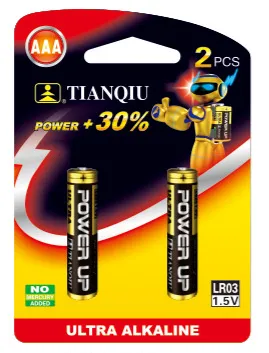
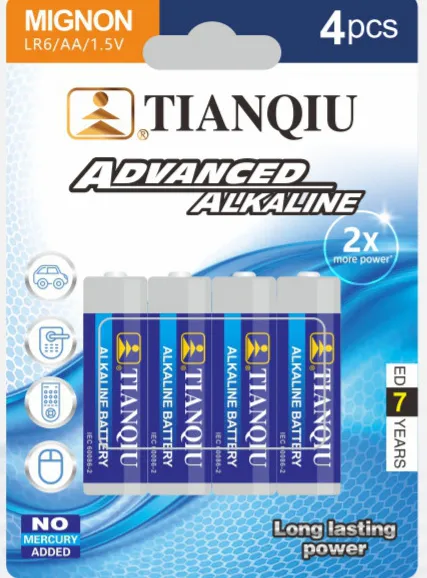
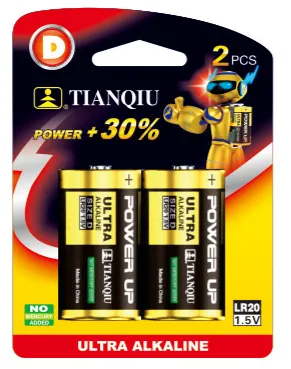
| Alkaline (LR6 / LR03 / LR20) | 3–5 years |
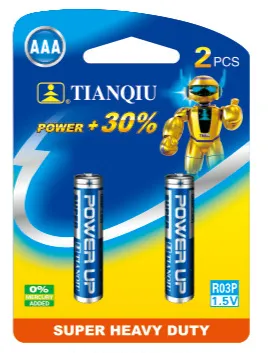
| Carbon zinc (R6P / R03P) | 2–3 years |
| Lithium button (CR2032 and similar) | ~5 years |
| Silver oxide / zinc-air | 1–2 years after activation |
Shelf life assumes original packaging, cool and dry storage. Heat is the silent killer — a battery stored at 35 °C loses capacity years faster than one at 20 °C.
Usage life: what the device decides
Usage life depends on the current draw, not the capacity alone. Two rules of thumb:
- Low-drain devices (wall clocks, smoke alarms, TV remotes): an alkaline AA runs for months to years.
- High-drain devices (toys, flashes, game controllers): the same AA lasts hours.
This is why a clock “runs forever” on a battery that dies in a camera in a week — it is the same cell, doing very different work.
The honest capacity comparison
- AA alkaline: ~2,000 mAh at low drain
- AAA alkaline: ~1,000 mAh
- D alkaline (LR20): ~15,000–18,000 mAh — the big one for radios and flashlights
- Carbon zinc equivalents: roughly one-third of the alkaline figure
The chemistry lesson for buyers
The biggest life-for-money factor is chemistry selection: carbon zinc for light loads, alkaline for real work, lithium for extreme conditions. For a private-label line, the standard retail mix is carbon zinc as the entry tier and alkaline as the quality tier — customers see the difference in their own devices.
We publish real capacity and application-duration data for every model in the EU battery information files — see the CR2032 example or the full model list.
The two numbers to track
If you stock batteries: rotate on shelf life. If your customers ask “why did my battery die”: check the device, not the battery. Both answers are in this article — and both are why we keep the chemistry tiers separate on the shelf.
Questions behind the article?
The trade team answers technical and commercial questions — send us your market and product interest.
Ask a question