“How many volts is a AA battery?” The short answer: 1.5V for alkaline and carbon zinc, 1.2V for NiMH rechargeable. But voltage is the most misunderstood specification in the battery drawer — because the number stamped on the pack is the nominal voltage, not a constant.
The common battery voltage chart
| Battery | Chemistry | Nominal voltage |
|---|---|---|
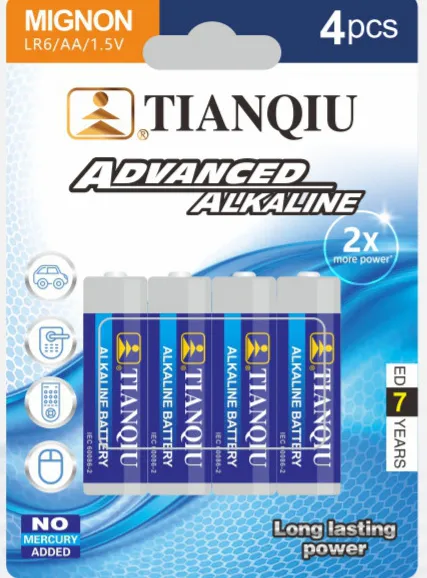
| AA (LR6 / R6P) | Alkaline / carbon zinc | 1.5V |
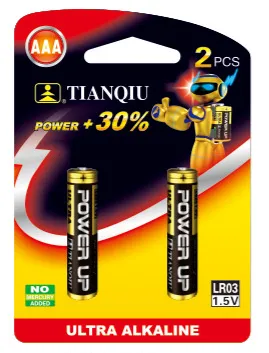
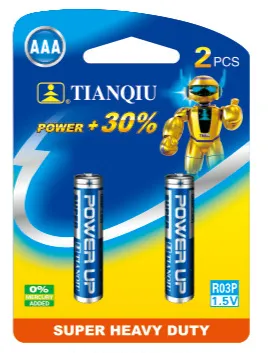
| AAA (LR03 / R03P) | Alkaline / carbon zinc | 1.5V |
| C (LR14) / D (LR20) | Alkaline / carbon zinc | 1.5V |
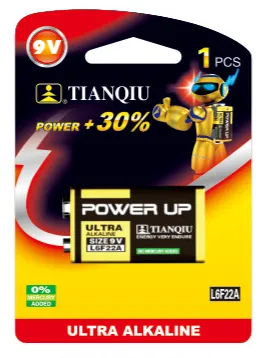
| 9V (6LR61 / 6F22) | Alkaline / carbon zinc | 9V |
| CR2032, CR2025, CR2016 | Lithium (Li-MnO₂) | 3V |
| LR44 / AG13 | Alkaline button | 1.5V |
| SR44 / 377-type | Silver oxide | 1.55V |
| A10 / A13 / A312 / A675 | Zinc-air | 1.4V |
| 23A | Alkaline specialty | 12V |
| AA / AAA rechargeable | NiMH | 1.2V |
Why 1.5V is not the whole story
A fresh alkaline AA measures about 1.6V right off the shelf, drops through 1.5V as it works, and is “dead” for most devices around 1.0V. The discharge curve is a slope — which is exactly why silver-oxide button cells (1.55V) exist: their curve is nearly flat, which matters for watches and medical instruments.
The mistake that kills devices
Voltage mismatch, not capacity, is the most common cause of “my battery doesn’t fit”. Three cells that look identical can be completely different:
- LR44 (1.5V alkaline) vs SR44 (1.55V silver oxide) — same size, different chemistry, different devices
- CR2032 (3V lithium) vs two LR44 (1.5V) — some devices take either, most do not
- 23A (12V) vs a button cell that looks the same size — never interchangeable
The rule OEM buyers should enforce
For any private-label programme, print the voltage and chemistry on the pack as prominently as the brand name. It protects the retailer from returns, the device from damage, and your brand from the “wrong battery” blame.
We supply every cell in the chart above — browse the six product families or check the model types.
Questions behind the article?
The trade team answers technical and commercial questions — send us your market and product interest.
Ask a question